Thinking about scrapping your car but not sure if it’s the right decision?
Whether your vehicle has failed its MOT, become too expensive to repair or simply reached the end of its life, these FAQs explain everything you need to know before scrapping your car.
We’ve helped thousands of UK drivers recycle their vehicles safely through our trusted network of Authorised Treatment Facilities, and we’ve created this knowledge centre to answer the questions we hear every day.
Search by topic below or explore our most popular guides.
200+ expert articles & FAQs
Hundreds of 5 star reviews
A network of approved scrapyards
Guaranteed Prices with Scrap Local
Search expert answers covering scrap cars, paperwork, payments, collections, vehicle recycling, salvage vehicles, used parts and much more.
What is Scrap Local?
Can I sell a salvage car?
About Scrap Local
Learn who we are, what we do and why thousands of UK drivers trust us to recycle their vehicles.
How Vehicle Recycling Works
Understand the journey of your vehicle from collection to recycling and everything in between.
Need more help?
Can't find what you're looking for? Contact us direct and our friendly staff will be happy to help.
Some vehicles are obvious candidates for scrapping, while others may still have repair or resale value.
This section explains the common signs that it’s time to scrap your car, when repairs are no longer economical and whether a roadworthy vehicle could still be worth recycling.
If your car costs more to repair than it’s worth, struggles to pass its MOT, or has been written off by an insurer, it’s likely time to scrap it.
Other common signs include:
If you’re unsure whether to repair or scrap, our team can provide a free valuation to help you decide.
Deciding whether to repair or scrap your car usually comes down to its condition, repair costs and overall value.
If your vehicle has suffered major mechanical failure, extensive corrosion or repeated MOT failures, repairing it may cost more than the car is worth.
Older vehicles with high mileage can also become increasingly expensive to maintain, especially if replacement parts are difficult to source.
On the other hand, if the repair is relatively minor and the vehicle still has a good market value, repairing or selling it privately could be the better option.
At Scrap Local, we’ll assess your vehicle’s additional salvage value as well as its scrap value.
If it’s worth more as a salvage vehicle, we’ll explain your options so you can make an informed decision before accepting a quote.
In many cases, yes.
As vehicles age, repairs become more frequent, and replacement parts can become increasingly expensive.
If your car is costing more to maintain than it’s worth, scrapping it may be the most economical solution.
Even older vehicles still contain valuable recyclable metals and reusable components, meaning they often retain a scrap value regardless of their age.
If your vehicle is particularly desirable or has sought-after parts, it may also qualify for a higher salvage value instead of being valued purely as scrap.
Scrap Local compares both options through our nationwide network, helping ensure you receive the best price for your vehicle.
Yes. A vehicle doesn’t have to be damaged, written off or fail its MOT before it can be scrapped.
Many customers choose to scrap perfectly roadworthy vehicles because they’re no longer economical to keep, have become unreliable or are simply no longer needed.
If your vehicle still has significant resale value, however, selling it privately or as a salvage vehicle may produce a better return than scrapping it.
At Scrap Local, we’ll discuss your vehicle’s condition during your confirmation call to help ensure the most suitable disposal option is considered.
Common reasons for scrapping a car include:
The top MOT failure issues are:
Although most can be repaired, costs often exceed the car’s worth, especially on older vehicles.
That’s why many owners choose to scrap their MOT failure instead.
Read our guide on the Top MOT Failure Cars!
Yes.
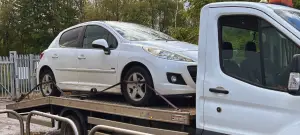
Scrap Local regularly collects non-running vehicles from homes, workplaces, garages and roadside locations throughout the UK.
Whether your car has a seized engine, flat battery, gearbox failure or another mechanical fault, our licensed collection partners have the equipment needed to recover vehicles that cannot be driven.
When requesting a quote, simply let us know that the vehicle doesn’t start or drive so we can arrange the appropriate recovery vehicle.
There are no additional collection charges simply because your car is a non-runner.
Yes.
Scrap Local can collect damaged, accident-damaged and insurance write-off vehicles, although the process depends on the vehicle’s condition and ownership.
If the vehicle still has outstanding insurance or finance matters, you’ll need to ensure you have the legal authority to dispose of it before collection.
Many damaged vehicles still retain significant value because reusable parts can often be recovered before the remaining shell is recycled.
Where appropriate, Scrap Local will offer your vehicle to our approved network of salvage buyers to see whether it attracts a higher offer than standard scrap value.
Yes.
Vehicles that have been stored in garages, driveways or private land for months, or even years, can still be scrapped.
Even if the battery is flat, the tyres have deflated, or the engine no longer starts, Scrap Local can arrange collection using specialist recovery equipment.
Before collection, it’s worth checking whether you still have the keys and any paperwork available, although a missing V5C won’t necessarily prevent the vehicle from being scrapped.
If your vehicle has been declared SORN, you don’t need to tax it before collection, provided it remains off the public road until it’s recovered.
The value of a scrap car depends on much more than its age.
Factors such as weight, condition, current scrap metal prices and whether the vehicle has salvageable parts can all affect how much it’s worth.
Here, we explain what influences scrap prices and when it might be worth selling your vehicle for salvage instead.
The value of a scrap car isn’t fixed, as it depends on several key factors.
The most important factor is the vehicle’s metal weight; the heavier your vehicle, the more it’s worth. (Do not try to fill it with objects to increase weight; your vehicle will not be accepted.)
Location also plays a role, as scrap prices vary across the UK due to local demand, transport costs, and buyer competition. Additionally, metal prices fluctuate weekly, resulting in varying quotes.
The condition of your vehicle matters as well:
Learn more: How much do you get for scrapping a car?
Several factors influence how much your scrap car is worth.
These include:
At Scrap Local, we assess every vehicle individually and, where appropriate, compare scrap and salvage values through our nationwide network to help maximise your quote.
We also sell used car parts – quality, tested & at affordable prices!
Salvage cars are worth more than scrap value.
Scrap value is based only on metal weight, whereas salvage vehicles are assessed on their condition, resale potential, and parts demand.
Scrap Local usually considers cars under 10 years old for salvage.
If your car meets these criteria, we’ll ask for photos and share them with our trusted buyers, who then place bids.
Once you accept the highest offer, the process is identical to scrapping: free collection and quick payment.
Scrap car values rise and fall throughout the year.
Generally, prices are stronger in spring and summer, when the market for reusable metal increases, but it’s best to check current rates before deciding.
At Scrap Local, we track live metal prices and adjust our quotes to reflect real-time values, meaning you’ll always get a fair, up-to-date offer for your area.
If your car’s damaged, unused, or costing more than it’s worth, it’s usually best to scrap it sooner rather than later.
Before collection day, there are a few simple checks that can help make the process as smooth as possible.
Learn what should stay with the vehicle, what you should remove beforehand and whether missing parts or the lack of an MOT will affect your ability to scrap your car.
A valid MOT is not required to scrap your vehicle.
Many cars are scrapped specifically because they’ve failed or expired MOTs.
Scrap Local can collect non-runners and MOT failures directly from your home or garage at no extra cost.
Related: How to sell an MOT failure car | Top Tips to Pass an MOT
Yes, you can usually scrap a car with missing parts.
Many vehicles collected for scrap already have parts removed, especially older or damaged cars.
Common missing items include batteries, catalytic converters, alloy wheels, radios, mirrors, bumpers, or interior components.
However, missing parts can affect the value of the vehicle.
Scrap car prices are based on factors such as the vehicle’s weight, condition, demand for reusable parts, and whether key components are still fitted.
Cars that are more complete will normally achieve a higher price than heavily stripped vehicles.
Most authorised treatment facilities (ATFs) will still accept incomplete vehicles as long as the car can be identified and collected safely.
You should always be honest about any missing parts when requesting a quote so the valuation is accurate from the start.
If the vehicle has had essential parts removed, such as the engine, gearbox, or multiple body panels, this may reduce the quote significantly or affect collection requirements.
In some cases, specialist recovery equipment may be needed if the car cannot roll or steer properly.
Read more: Can I scrap a car with missing parts?
Please don’t remove parts or drain fluids from your car.
All Scrap Local vehicles are handled by licensed Authorised Treatment Facilities (ATFs), which are legally responsible for depollution (the safe removal of oils, fluids, and hazardous materials).
Removing major components like wheels, the catalytic converter, or the engine may lower your quote or make the vehicle ineligible for collection.
It’s always best to keep your car complete for the highest price.
Yes.
Before your vehicle is collected, you should remove all personal belongings, paperwork and valuables.
It’s easy to overlook items stored in gloveboxes, door pockets, the boot or under seats, so we recommend giving the vehicle a thorough check before collection.
Once your vehicle has entered the recycling process or been transported to an Authorised Treatment Facility, recovering personal items can be difficult and isn’t always possible.
Before handing over your keys, take a few minutes to make sure you’ve removed everything you wish to keep, including sat navs, dash cameras, sunglasses, paperwork and any personal possessions.
Keep the vehicle complete. Missing parts reduce its weight and value.
Have your documents ready: valid photo ID, V5C logbook and keys.
Be honest about the condition. Accurate details help us get you the best possible quote.
If your car qualifies as salvage, we will ask you to send clear photos of it from all angles so that our agents can assess its resale potential and bid accordingly.
Vehicle recycling is just one part of the journey.
Our growing library of guides covers scrap cars, salvage vehicles, used parts, recycling, road safety, metal recycling and much more.
Whether you’re looking for expert advice or simply want to learn something new, you’ll find helpful resources below.

Finding a legitimate scrap vehicle buyer near you doesn’t have to be stressful, but it pays to know what you’re looking for. With hundreds of buyers operating across the UK, from licensed Authorised Treatment Facilities to salvage specialists, this guide walks you through everything: how to find and verify a
Not every vehicle is straightforward to scrap.
If you aren’t the registered keeper or you’re unsure whether you’re legally allowed to dispose of the vehicle, these FAQs explain who can authorise a vehicle for scrapping and when additional permission may be required.
You can’t legally scrap a vehicle unless you have permission from the registered keeper or can prove ownership.
If the car isn’t in your name, you’ll need:
More information: DVLA & Documentation FAQs
Once your car has been processed at an ATF and issued a Certificate of Destruction (CoD), it’s permanently removed from the DVLA register and cannot be returned or reinstated.
Before collection, ensure you’ve removed all personal belongings and any items you want to keep.
Scrapping a car is about much more than crushing old vehicles.
Modern recycling processes recover reusable parts, safely remove hazardous materials and recycle the majority of each vehicle’s materials.
These FAQs explain what happens after collection and why choosing a licensed recycler is so important.
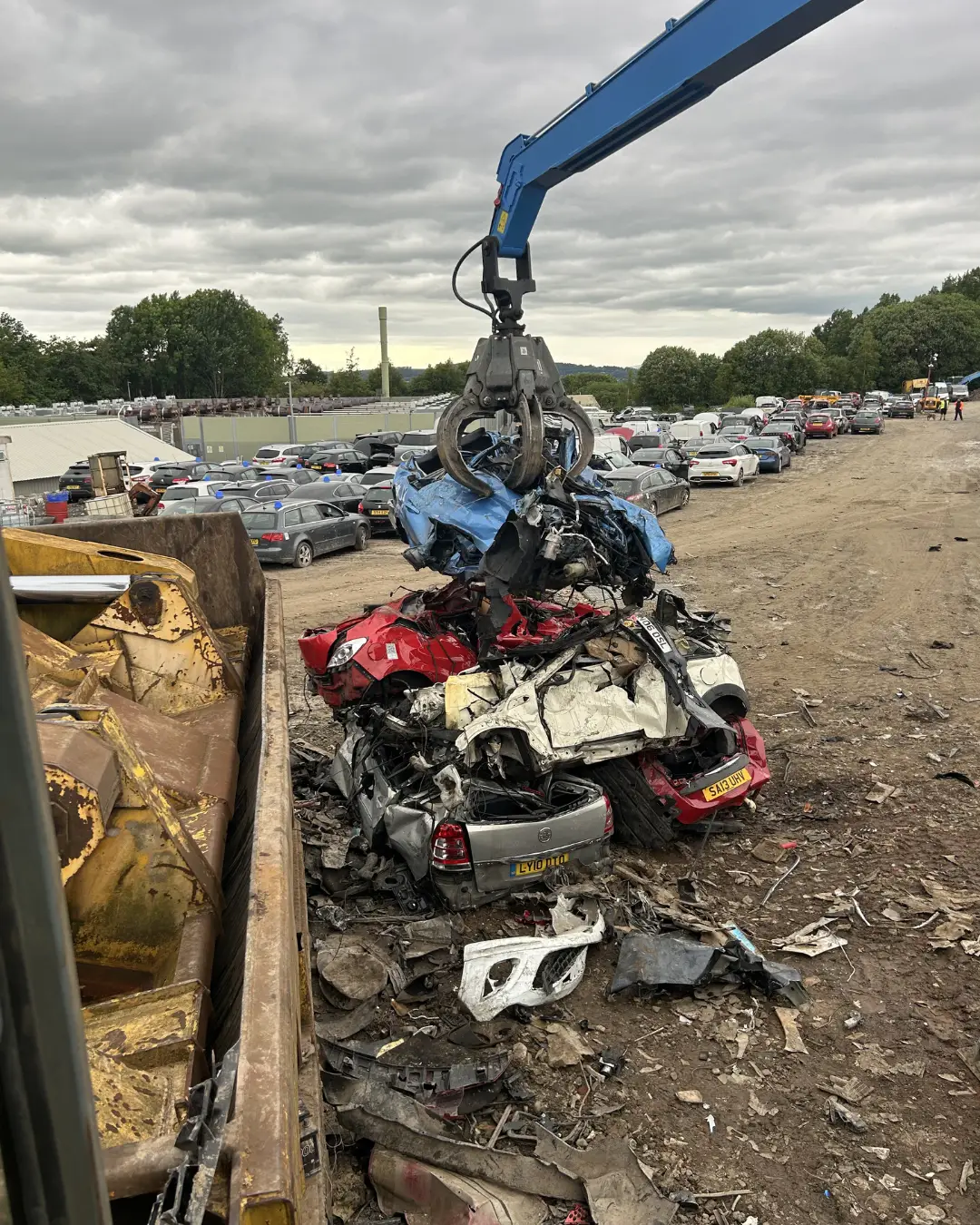
Once your car has been depolluted, any usable parts, such as engines, tyres, and gearboxes, are removed for reuse.
The rest of the vehicle is shredded, and the metals are separated and melted down for recycling.
It’s a detailed process, but it means around 95% of your car is given a new purpose, helping cut down on waste and reducing the need for new raw materials.
Read more: Collection Process
Choosing a licensed vehicle recycler helps ensure your car is scrapped safely, legally and in accordance with UK environmental regulations.
Licensed recyclers and Authorised Treatment Facilities (ATFs) must follow strict rules for handling end-of-life vehicles, including the safe removal of hazardous materials such as engine oil, fuel, batteries and coolant before the vehicle is dismantled or recycled.
Using an unlicensed operator could leave you at risk if your vehicle isn’t disposed of correctly or if the necessary paperwork isn’t completed.
In some cases, your vehicle could even remain registered in your name if the correct processes aren’t followed, potentially leading to unnecessary complications with the DVLA.
Licensed recyclers also maximise the amount of material recovered from every vehicle.
Reusable parts can often be given a second life, while metals, plastics and glass are separated and recycled wherever possible, helping reduce waste and conserve valuable natural resources.
At Scrap Local, we only work with licensed collectors and Authorised Treatment Facilities across our network.
This helps ensure every vehicle is handled responsibly, recycled in line with current legislation and processed through approved facilities that meet high environmental and operational standards.
Yes. When carried out through a licensed Authorised Treatment Facility (ATF), scrapping a car is one of the most environmentally responsible ways to dispose of an end-of-life vehicle.
Before a vehicle is dismantled, it goes through a process called depollution, where potentially harmful substances such as engine oil, fuel, brake fluid, coolant, batteries and air conditioning refrigerants are safely removed to prevent pollution.
Once depollution is complete, reusable parts are carefully removed where appropriate, helping extend the life of components that can be fitted to other vehicles.
The remaining vehicle is then dismantled and separated into recyclable materials such as steel, aluminium, copper, plastics and glass.
Modern vehicle recycling processes allow up to 95% of a vehicle’s weight to be recovered and reused or recycled, significantly reducing the amount of waste sent to landfill and lowering the demand for newly extracted raw materials.
By choosing Scrap Local, you’re helping ensure your vehicle is recycled through licensed Authorised Treatment Facilities that follow strict environmental standards.
This supports a more sustainable vehicle recycling industry while helping valuable materials remain in circulation for future use.
Choose a service & we’ll search our network to find you the best scrapyard for your enquiry!
We have hundreds of scrap car buyers waiting to buy your scrap car.