Your car has finally given up. It’s sitting on the drive, it won’t start, and you’ve decided it’s time to scrap it.
The next step seems obvious: search for a local buyer and book a collection. But the moment you start looking, you hit a wall.
Dozens of results appear with no obvious way to tell the trustworthy ones from the ones that’ll slash your quote the moment they pull up.
If you’re searching for a scrap vehicle near me, that frustration is familiar; all you want is a fair price and a quick resolution.
The problem is that not every buyer advertising scrap car collection near you is operating legally.
Some aren’t licensed to handle end-of-life vehicles at all.
Others bury hidden deductions in the small print, or only collect on terms that don’t suit you.
Calling them individually to compare prices takes time most people don’t have, and even then, the quotes aren’t always based on the same assumptions about your vehicle.
This guide explains what a legitimate local buyer looks like, what to check before you commit, how to protect yourself from the most common traps, and how platforms like Scrap Local make finding a vetted, licensed recycler near you significantly faster than the traditional approach.
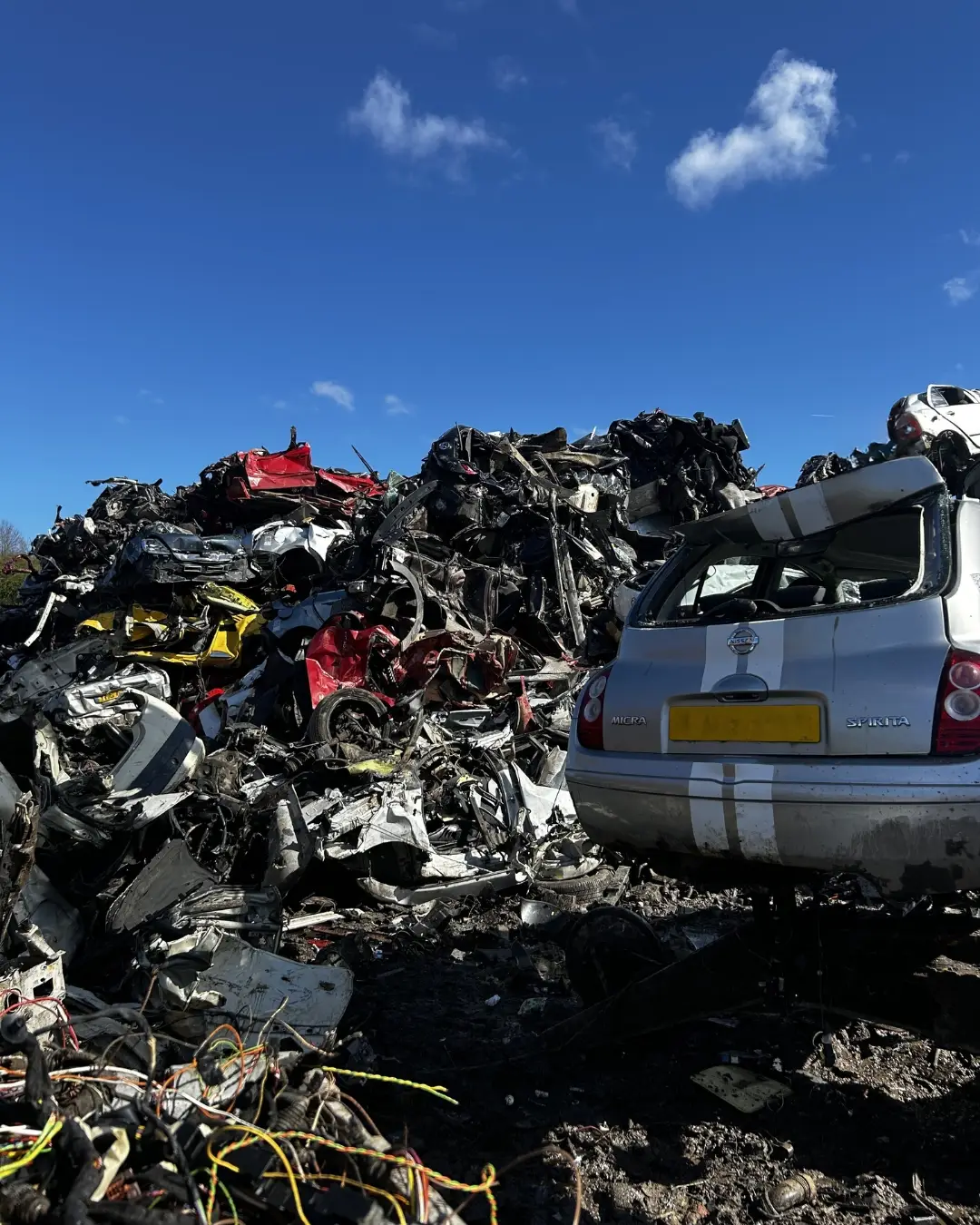
Not all scrapyards are equal under the law.
In the UK, any business that handles end-of-life vehicles must hold an environmental permit and operate as an Authorised Treatment Facility (ATF).
To scrap your car, contact an ATF or authorised scrap yard to get a quote and arrange collection.
ATFs in England are registered with the Environment Agency, those in Scotland with SEPA, in Wales with Natural Resources Wales (NRW), and in Northern Ireland with DAERA.
This isn’t a minor technicality; it’s a meaningful legal distinction that directly affects you as the seller. You can verify ATF status using the relevant public register for your nation before agreeing to anything.
Only an ATF-registered vehicle recycling centre can legally issue a Certificate of Destruction (CoD).
This document is the official confirmation that your vehicle has been destroyed responsibly.
It’s important to note that while the CoD removes the basis for ongoing vehicle-related liability, you must also notify the DVLA after the sale or transfer for scrapping using the exact date and details to update their records, either online or by post, and you may need to prove you’re entitled to do so with the V5C reference.
Without completing that step, parking fines, road tax demands, or other notices linked to the vehicle’s plates could still find their way back to you.
The CoD is provided free of charge by any legitimate ATF.
If a buyer hesitates when asked about it, or treats it as an optional extra, that’s a clear signal to walk away.
Any reputable buyer will share their ATF registration details without resistance, and you can confirm the licence is current through the appropriate public register for your part of the UK.
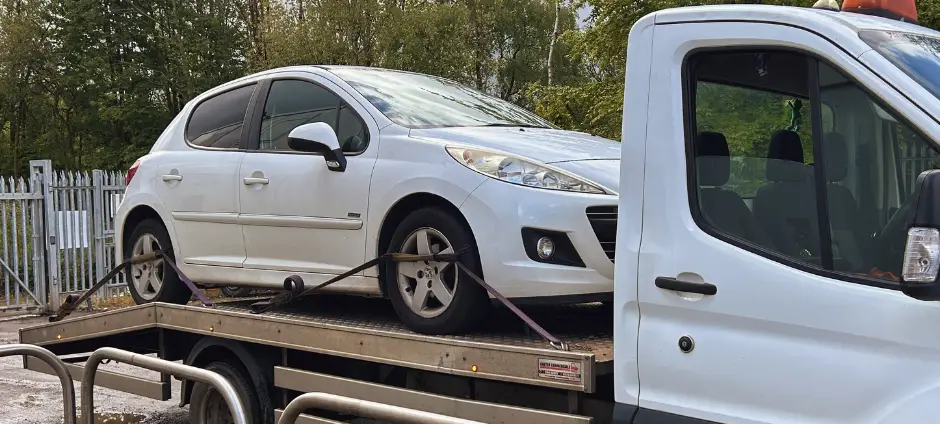
Once you’ve confirmed ATF status, there are two more practical checks worth making before you commit to a booking.
These take a few minutes and can save you significant frustration on collection day.
Collection flexibility matters more than most people expect. Not all car breakers near you operate the same hours.
Some only collect Monday to Friday during business hours.
Availability varies by provider, but some services let you book a convenient collection date and have the car collected from home or work, while smaller local yards may not.
Many UK operators offer free collection nationwide, so your location can affect timing more than basic availability, whether you’re in Lancashire or elsewhere.
If you can’t take time off work or need a specific window, confirm this upfront.
With Scrap Local, anyone who has a valid form of photo ID can be there for collection; it does not have to be the owner of the vehicle, as long as they have access to the keys and logbook.
For more details on what to expect from the collection itself, see our scrap car collection process.
Payment practices also vary widely. Licensed ATFs don’t pay in cash, a requirement in place under the Scrap Metal Dealers Act 2013.
Bank transfer is standard, but the timeline differs.
Some services pay on the day of collection; others process the transfer within 24 to 48 hours.
Neither is necessarily a problem, but you want to know which applies before the collection is booked.
Ask for written confirmation so there’s no ambiguity when the driver arrives.
The most common trap in scrap car transactions is accepting a strong quote online and then being presented with a significantly reduced offer at the point of collection.
Rogue operators rely on the fact that by the time the driver arrives, most sellers are too committed to the process to push back.
Understanding the tactics they use makes them easy to spot.
You can read more about the risks of using unlicensed scrap car dealers and how they operate.
The most frequent deductions are entirely invented.
If you plan to remove parts first, the vehicle should be off the road on private land and declared SORN before anything is taken off.
Accepting an offer without clarity could cost you significantly more than the difference between a good and average scrap price.
For a checklist of what a legitimate scrap car quote should always include, see this guidance on what a legitimate scrap car quote should always include.
When you search for a scrap vehicle near me and start calling yards directly, you’re comparing prices quoted at different times, by different buyers, based on different assumptions about your car’s condition.
One yard might base their figure entirely on kerb weight. Another factors in parts value or model demand.
Without a like-for-like comparison, the first quote that sounds reasonable tends to win by default rather than merit.
There’s also the time cost. Researching which local scrapyards are ATF-registered, then calling each one with your vehicle details and waiting for a callback, can take the better part of an afternoon.
Metal prices shift week to week, so a quote from Tuesday isn’t necessarily valid by Friday, which is why regional services like Scrap My Car Manchester emphasise up-to-date valuations based on current local rates.
The process is inefficient even when everyone you speak to is operating legitimately, and if you have questions or run into issues it’s usually easier to contact Scrap Local directly than to chase multiple individual yards for answers.
This is the problem Scrap Local was built to solve.
You simply enter your vehicle registration and postcode to get an instant quote, compare licensed buyers across the country, and arrange collection without calling around.
The platform covers cars, a van, and other commercial vehicles through its network of ATF-registered scrapyards and car breakers, and is particularly useful if you’re trying to sell a non-runner car without the hassle of arranging transport yourself.
Because the vehicle registration draws on confirmed kerb weight and model data, every quote is calculated on the same baseline, making comparisons genuinely meaningful.
For anyone looking to sell a scrap car online quickly and accurately, it removes the parts of the process that are genuinely tedious without cutting corners on the ones that matter.
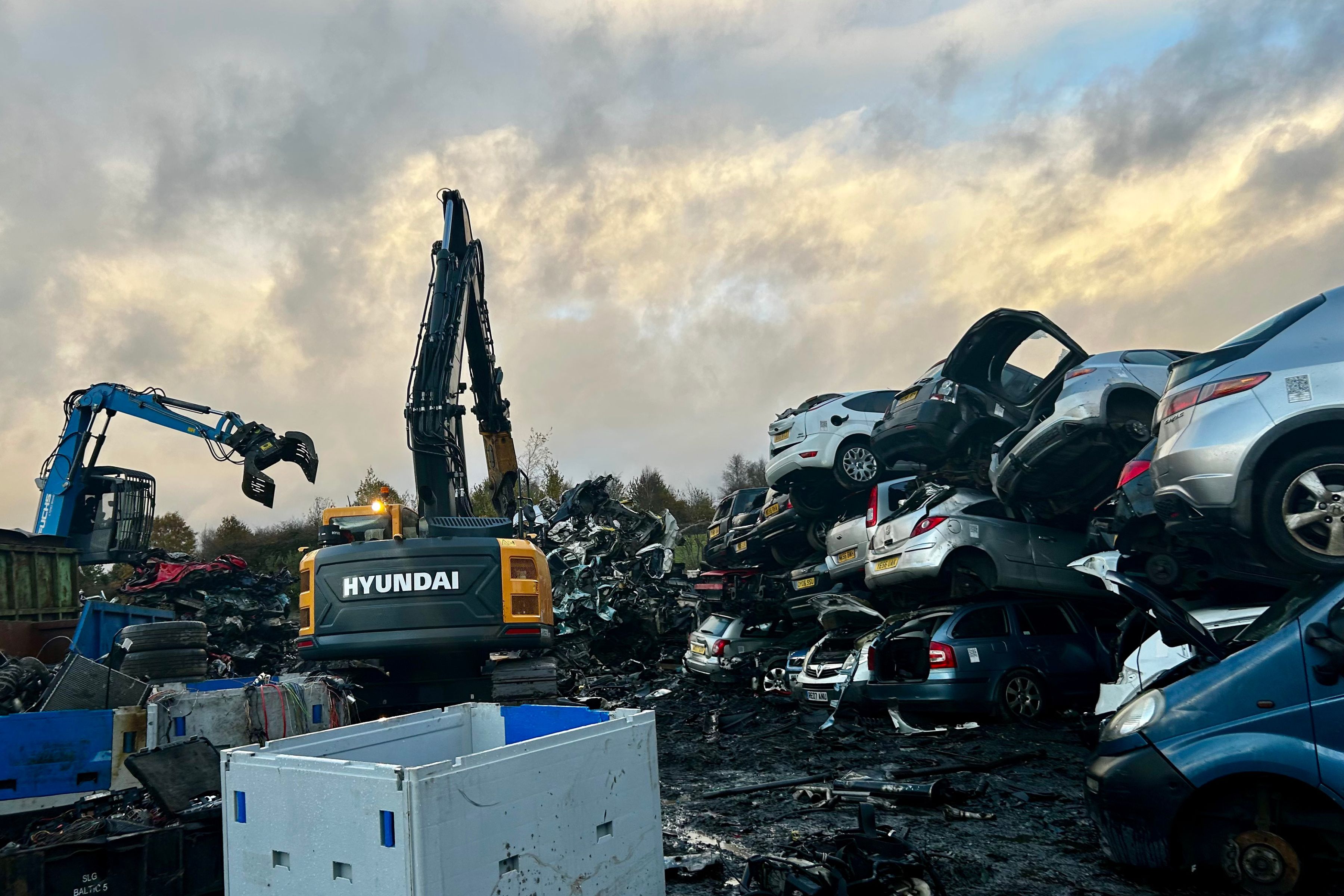
The starting point for any scrap car price is kerb weight, measured in tonnes, multiplied by the current per-tonne rate for light iron.
In practice, scrap car prices are shaped by various factors including age, location, and the car’s condition.
Current market data suggests per-tonne rates in the UK average around £250 to £300 (as of early 2026), putting most average-sized cars somewhere between £200 and £500 as a base figure, though these rates fluctuate weekly, so it’s worth checking current figures when you’re ready to sell and see how much cash you could get.
Common end-of-life models such as the Ford Fiesta and Ford Focus often fall into this range, and if yours is accident-damaged or written off, it may be worth exploring options to sell your damaged car rather than treating it purely as scrap.
Heavier vehicles like SUVs naturally sit at the upper end of that range, so comparing quotes is usually the best price check if you want the most money, especially in cities with low-emission zones where services such as Scrap Car Birmingham help drivers move on from higher-polluting models.
Non-ferrous metals can push the figure higher. Copper wiring, aluminium components, and high-demand reusable parts like catalytic converters all add value above the base metal weight.
Removing heavy or critical parts before collection usually cuts the offer, because buyers pay for the total weight and overall state.
The car’s condition matters too, not dramatically, but enough that accurately describing it at the quoting stage keeps the final offer consistent; a damaged car and other damaged vehicles can still have value, but it’s sensible to weigh repair costs against the scrap return.
Metal markets shift regularly, with prices moving 10 to 30% across a year depending on global commodity demand, so understanding the scrap value of a car in your area at the time you sell is essential.
That’s one reason comparing three or more quotes based on the same vehicle data gives a much clearer picture of the going rate than relying on a single offer, and why area-specific services like Scrap Car Stockport focus on transparent, comparable valuations.
For broader advice on scrap values and selling options, read more of our scrap car guides.
Quotes based on “car size” categories rather than your registration number are rarely accurate.
The registration number pulls confirmed manufacturer data, including exact kerb weight, which is the foundation of any reliable valuation.
Any cash-for-cars service quoting without it is estimating, not pricing.
When you’re searching for a scrap vehicle near me, this distinction matters, and using a local scrapyards directory alongside a registration-based quote from a licensed buyer near you will almost always be more accurate than a category estimate from an unverified one.
At an ATF, end-of-life vehicles are recycled, and at least 95% of their materials can be recovered.
Preparation on your end is straightforward and takes very little time.
The V5C logbook is the core document and acts as the registration certificate.
On the day of collection, you keep the yellow section (section 4 on newer versions) and hand the main document to the ATF.
You’ll also need to provide a valid form of photo ID, such as a driving licence or passport.
For a full list of documents you may be asked for, see guidance on what documents you need to scrap your car.
If your V5C is missing, we can still collect your car, but it does require written notification to the DVLA with alternative proof of ownership.
If needed, that can include other documents linked to the registration plate.
A replacement V5C costs £25 and takes a few weeks, so it’s worth checking before you book the collection rather than discovering the problem on the day.
SORN vehicles can still be scrapped legally through an ATF, but if you want to keep any parts first, the vehicle must be off the road before anything is removed.
After the vehicle has been collected and the Certificate of Destruction issued, ensure the DVLA is notified once the car reaches the ATF so their records are updated and you avoid any future liability; this is done using the 11-digit reference number from the V5C.
Many ATFs handle part of this notification directly, but confirming with the DVLA yourself is the only reliable way to close the loop and fully end your liability.
Skipping this step can result in a fine of up to £1,000, even after the car is physically gone.
Once the car reaches the ATF, hazardous materials are removed, usable parts are processed, and the rest is recycled in line with environmental regulations.
Finding a trustworthy local scrap vehicle buyer comes down to a short, clear checklist:
Reputable, licensed buyers will generally meet all of these requirements, and verifying their documentation through the appropriate public register gives you an extra layer of confidence.
If your car is ready to go, start with a quote on Scrap Local.
Rather than working through a list of local scrapyards one call at a time, you can compare quotes from licensed buyers near you in minutes, using your registration number for accurate, like-for-like pricing from the start and helping you get the best price for an unwanted car or old car.
You’ll know quickly which buyer offers the best combination of price, collection flexibility, and fast payment, without the usual back-and-forth.
Short answer: Search online using your postcode, use a comparison website, or check the Environment Agency’s public register for licensed ATFs in your area.
The easiest way to find a local scrap vehicle buyer is to enter your car’s registration number and postcode into a scrap car comparison site.
These platforms instantly search a network of licensed buyers and return multiple quotes, saving you the time of calling individual scrapyards.
Services like Scrap Local connect you with trusted, local vehicle recyclers who can often collect your car the same day or within a few days.
If you prefer to search manually, the UK government’s Environment Agency public register lets you search for Authorised Treatment Facilities (ATFs) by name, address, or postcode, completely free of charge.
You can also use the DEFRA website’s ATF registry search tool to verify any yard you find locally.
Always choosing a buyer from one of these registers ensures the sale is legal and that you receive a Certificate of Destruction (CoD).
Short answer: An ATF is a government-licensed scrapyard. It’s the only type of facility legally allowed to scrap your car in the UK.
An Authorised Treatment Facility (ATF) is a vehicle dismantler, scrapyard, or breaker’s yard that operates under a strict set of environmental regulations, including an environmental permit issued by the Environment Agency (EA) in England, SEPA in Scotland, NRW in Wales, and DAERA in Northern Ireland.
Only ATFs can legally issue a Certificate of Destruction (CoD), the official document that removes the vehicle from your name and proves to the DVLA it has been responsibly disposed of.
Using an unlicensed buyer can leave you legally responsible for the vehicle even after you have handed it over, meaning you could face liability for road tax, fines, or incidents involving the car.
A licensed ATF must also pay you via bank transfer or cheque (never cash) under the Scrap Metal Dealers Act 2013.
Additionally, they are required by law to verify your identity before accepting a vehicle.
Short answer: Check the Environment Agency’s public register online, ask for their ATF permit number, and verify they will issue a Certificate of Destruction.
The most reliable way to verify any UK scrap buyer is to search for them on the Environment Agency’s public register at environment.data.gov.uk, which lists all permitted ATFs, waste carriers, and licensed scrap metal dealers.
You only need the company name or postcode to search.
If a dealer cannot be found on this register, they are likely operating illegally, and you should not deal with them.
A legitimate scrap buyer will also hold all three required licences: an environmental permit (waste management licence), a waste carriers licence if they collect vehicles, and a scrap metal dealer’s licence from their local authority.
You can also cross-reference their registration number on the DVLA’s vehicle register, ask for proof of their ATF permit number, or check reviews on independent platforms like Trustpilot.
A reputable operator will volunteer this information without hesitation.
Short answer: Avoid any buyer who offers cash, cannot provide a Certificate of Destruction, has no verifiable licence, or asks you to drop the car at an unusual location.
Cash offers are illegal under the Scrap Metal Dealers Act 2013; all payments must be made via bank transfer or cheque.
If a buyer insists on paying in cash, this is a serious red flag that they are operating outside the law.
Similarly, a buyer who cannot or will not provide a Certificate of Destruction should be avoided, as this document is your legal proof that the car has been scrapped and is no longer your responsibility.
Other warning signs include buyers with no verifiable ATF licence number, no physical business address, or those who arrange collection at unusual locations such as car parks or laybys.
Scam operators sometimes use professional-looking websites or fake business registration numbers to appear credible.
Always confirm the buyer’s details match the public register before agreeing to anything, and never sign over your V5C until you are confident the buyer is legitimate.
Short answer: A scrap buyer pays by weight for end-of-life vehicles; a salvage buyer pays more because they plan to repair, resell, or break the car for valuable parts.
A scrap car is typically beyond economical repair and will be crushed and recycled as raw metal.
Scrap value is calculated primarily on the vehicle’s weight and the current price of steel and aluminium.
A salvage buyer, on the other hand, purchases damaged or high-mileage cars that still have usable components, repairable bodywork, or enough demand from mechanics and enthusiasts to justify a higher price.
For vehicles like a high-specification performance car, a salvage buyer will almost always offer more than a straight scrap rate, because the parts (engine, gearbox, electronics, alloys) have strong individual resale value.
Comparison websites typically consider both scrap and salvage options when returning quotes, so it is worth ensuring your vehicle description is accurate, specifying if the engine runs, if the interior is intact, and whether all wheels are present.
Short answer: Use an online comparison service, get at least three quotes, and make sure you’re comparing like-for-like: all quotes should include free collection.
The simplest way to compare scrap car prices is to use a dedicated comparison platform that queries multiple buyers simultaneously using just your registration and postcode.
These services typically work with 100+ licensed buyers and return quotes within minutes, saving significant time versus calling scrapyards individually.
When comparing quotes, always check whether free collection is included. Some buyers may offer a higher headline price but deduct a collection fee on the day.
Make sure all quotes are based on the same vehicle description. If you leave out that the catalytic converter is missing or the engine is seized, the buyer may reduce the offer on collection, which is frustrating and wastes your time.
Scrap prices also move with metal commodity markets, so quotes can change week-to-week. If you receive a quote today, check whether it has an expiry period and aim to book collection promptly to lock in the price you were offered.
Short answer: Most licensed buyers can collect within 1–3 days of accepting a quote, with same-day collection possible in many areas.
The collection timeline depends on how busy local buyers are and your availability, but most reputable UK networks aim to collect within one to three days of a quote being accepted.
Same-day and next-day collections are widely advertised, particularly in urban areas with dense ATF coverage.
Once collection is booked, the driver will typically call ahead on the day to confirm a window and the handover itself, including a quick ID check.
Collections can be arranged from your home, your workplace, or a garage, anywhere the vehicle is safely accessible. If your car is not roadworthy and cannot be driven, buyers can send a flat-bed or recovery vehicle at no extra charge in most cases.
You should have your V5C, photo ID, and keys ready on the day to ensure the process goes smoothly.
Short answer: Yes, licensed ATFs and salvage buyers routinely collect non-runners, SORN vehicles, and cars with no MOT.
A car does not need to be roadworthy, have a current MOT, or even start to be eligible for collection by a licensed scrap or salvage buyer.
Many scrapyards specifically advertise the collection of non-runners, fire-damaged, flooded, and accident-damaged vehicles.
If the car cannot be driven onto a transporter, the buyer will arrange a recovery vehicle or flat-bed truck. This is standard practice and should not cost you anything extra.
If your car is on a SORN (Statutory Off Road Notification), you are not legally permitted to drive it on a public road, but that is no barrier to collection.
The driver will collect from your premises, whether that’s a private driveway, garage, or storage facility.
You should ensure the collection point is accessible and that the vehicle can be safely loaded. In some cases, buyers may reduce their offer slightly for a non-runner due to additional handling requirements, so be transparent about the car’s condition when requesting a quote.
Short answer: You need a photo ID, the vehicle’s keys, and your V5C logbook, though the V5C is not always mandatory.
When a licensed scrap buyer collects your vehicle, the Scrap Metal Dealers Act 2013 requires them to verify your identity.
Your V5C (registration document/logbook) is strongly recommended as it speeds up the process and can increase your quote; some buyers will not accept a vehicle without one. If you don’t have the V5C, you can still legally scrap the car, but you will need to write to the DVLA separately to notify them of the disposal.
Once the vehicle is collected, the ATF will provide you with a Certificate of Destruction. Keep this safe, as it is your legal proof that you are no longer responsible for the vehicle.
Short answer: You receive a Certificate of Destruction, get paid by bank transfer, and the DVLA is notified that you are then fully released from any responsibility for the vehicle.
Once your vehicle is collected or delivered to an Authorised Treatment Facility, the ATF will process the end-of-life vehicle (ELV) in line with UK environmental regulations, which include draining fluids, removing hazardous materials, and separating recyclable components before crushing or shredding.
The ATF will issue you a Certificate of Destruction (CoD), which is sent to the DVLA to formally remove the car from the road register.
Payment is made by bank transfer or cheque. You should never accept cash, and in many cases, funds arrive the same day as collection.
You should also cancel your vehicle’s road tax (you may be eligible for a refund on any full unused months), cancel your car insurance policy, and check that the DVLA’s vehicle register reflects the change in status.
If the ATF is registered with the DVLA scheme, they will handle the notification on your behalf, but it is always worth confirming this with the driver on the day of collection.
Founder & MD of Scrap Local
Choose a service & we’ll search our network to find you the best scrapyard for your enquiry!
Scrap Local has hundreds of UK-licensed scrap car buyers ready to buy your scrap car.