Scrapping a car involves more than arranging a collection. You’ll need to understand the paperwork involved, from your V5C logbook and DVLA notification to Certificates of Destruction (CoDs), SORN, vehicle tax and proof of ownership.
Our FAQs explain the documents you’ll need, your legal responsibilities and the steps to follow before, during and after your vehicle is collected.
We’ve helped thousands of UK drivers recycle their vehicles safely through our trusted network of Authorised Treatment Facilities, and we’ve created this knowledge centre to answer the questions we hear every day.
Search by topic below or explore our most popular guides.
200+ expert articles & FAQs
Hundreds of 5 star reviews
A network of approved scrapyards
Guaranteed Prices with Scrap Local
Search expert answers covering scrap cars, paperwork, payments, collections, vehicle recycling, salvage vehicles, used parts and much more.
What is Scrap Local?
Can I sell a salvage car?
About Scrap Local
Learn who we are, what we do and why thousands of UK drivers trust us to recycle their vehicles.
How Vehicle Recycling Works
Understand the journey of your vehicle from collection to recycling and everything in between.
Need more help?
Can't find what you're looking for? Contact us direct and our friendly staff will be happy to help.
Before scrapping your car, it’s important to understand the role of the DVLA, the documents you’ll need and your responsibilities as the registered keeper.
Whether you’re checking what paperwork is required, changing your details, keeping a private registration or scrapping a vehicle registered outside the UK, these FAQs explain the first steps to help ensure the process is completed correctly and in line with DVLA requirements.
The Driver and Vehicle Licensing Agency (DVLA) is the UK government body responsible for maintaining records of drivers and vehicles in Great Britain.
It issues driving licences, registers vehicles, collects Vehicle Excise Duty (road tax), records changes of keeper and keeps track of when vehicles are scrapped, exported or taken off the road.
When you scrap a vehicle, the DVLA must be informed so their records can be updated and you are no longer responsible for the vehicle.
The registered keeper is responsible for telling the DVLA that the vehicle has been transferred to an Authorised Treatment Facility or motor trader for scrapping.
You should not assume that the collection driver, recycling facility or Scrap Local will complete this responsibility for you.
The quickest option is usually to notify the DVLA online using the reference number from your V5C logbook.
Alternatively, you can complete the relevant yellow section of the V5C and send it to the DVLA. You should give the remainder of the logbook to the Authorised Treatment Facility or collector, where requested.
The receiving ATF may also update the DVLA when it issues a Certificate of Destruction, but this does not remove the registered keeper’s responsibility to report the transfer.
Keep the DVLA confirmation email or letter as evidence that you are no longer responsible for the vehicle.
Scrap Local can explain which V5C section to use and provide the relevant collector or facility details, but the registered keeper should ensure that the DVLA notification has been completed successfully.
Before scrapping your car, you must have the right documents ready.
This ensures your vehicle can be collected legally, processed at a licensed Authorised Treatment Facility (ATF), and removed from the DVLA’s register correctly.
To scrap a car legally, you’ll need:
Scrap Local arranges free collection and ensures your vehicle is taken to an Authorised Treatment Facility (ATF).
However, it’s your responsibility as the registered keeper to notify the DVLA once your car has been scrapped.
For an ordinary registration, you should leave the physical front and rear number plates attached when Scrap Local collects the vehicle.
The registration number is linked to the vehicle’s DVLA record, not to the plastic or metal plates.
Once the vehicle is recorded as scrapped, its ordinary registration will normally remain associated with that vehicle and cannot be used on another car.
However, if the vehicle has a private or personalised registration that you want to keep, you must apply to retain your private reg before the vehicle is scrapped.
Removing the physical plates is not enough to preserve your entitlement to the registration.
You should tell Scrap Local during the booking process if you are waiting for a private-registration application to be completed, as collection may need to be arranged after the DVLA has confirmed the change.
Yes, if you want to keep the private registration.
You must apply to the DVLA to remove the personalised registration from the vehicle before it is scrapped.
If the application is accepted, the DVLA will usually place the private registration on retention and assign the vehicle an age-related replacement registration.
Do not rely on physically unscrewing and keeping the number plates. The registration entitlement is controlled through the DVLA record, so keeping the plates themselves does not preserve your legal right to use the number elsewhere.
Once the vehicle has been destroyed and its record closed, it will be too late to retain the registration.
Wait until the DVLA has confirmed the change and the vehicle has been assigned its replacement registration before arranging final collection.
Let Scrap Local know about the change so the collection and paperwork use the correct registration details.
If your car has its original or ordinary registration, the number will normally remain linked to that vehicle’s DVLA record when the vehicle is scrapped.
You cannot usually transfer it to another vehicle merely because the original vehicle has been destroyed.
If the vehicle has a private registration that you want to keep, you must apply to remove it before the car is scrapped.
Subject to the DVLA’s eligibility requirements, the registration can then be placed on a retention document or transferred to another suitable vehicle.
If you do not complete the retention process before destruction, you risk losing your entitlement to the registration.
Scrap Local should therefore be told about any private plate before the collection is finalised.
If you’ve sold or transferred ownership, update this online via the DVLA website.
To change your address, either fill in the relevant section on your V5C or use the DVLA’s online service.
Keeping your records accurate helps prevent fines and delays with tax or legal notices.
If your car is registered outside the UK, you’ll need the original registration papers and proof of ownership before it can be scrapped.
Please call Scrap Local on 01254 963777 so our team can guide you through the process.


The V5C logbook, also known as the vehicle registration certificate, is one of the most important documents you’ll need when scrapping a car.
In this section, you’ll learn what the V5C is, how to complete it correctly, what to do if it’s been lost or contains incorrect information, and whether you can still scrap your vehicle without one.
The V5C logbook, also known as the vehicle registration certificate, is an official document issued by the DVLA (Driver and Vehicle Licensing Agency).
The registered keeper is the person recorded by the DVLA as being responsible for the vehicle’s registration.
The V5C includes key information such as:
You’ll need the V5C for most official processes, such as selling, scrapping, or transferring ownership of your vehicle.
When scrapping your car through Scrap Local, you’ll use section 9 (or section 4 on newer V5Cs) to notify the DVLA that the vehicle has been sold for scrap.
Keeping your V5C safe and up to date ensures that you remain compliant with UK vehicle registration laws and avoid fines for failing to declare changes in ownership.
Not necessarily. A vehicle can still be transferred for scrapping without the V5C, provided Scrap Local and the receiving facility can complete the necessary identity and entitlement checks.
Scrap Local will normally ask for:
You do not usually need to pay for a replacement V5C solely to have the vehicle collected.
However, without the V5C you cannot use its reference number to complete the normal online transfer process.
You will generally need to write to the DVLA with your name and address, the vehicle registration, its make and model, the exact transfer date and the name and address of the motor trader or facility receiving it.
A replacement may still be sensible if you need to retain a private registration or resolve another DVLA matter before scrapping.
Tell Scrap Local that the V5C is missing when confirming the vehicle details so the correct process can be explained before collection.
If you still have your logbook, fill out Section 9 (or Section 4 on newer versions) to notify the DVLA that your car has been scrapped.
Include the details of the ATF or collector, then post it to:
DVLA, Swansea, SA99 1BD.
Scrap Local can guide you through this process to make sure your details are recorded correctly.
The address on a V5C should be kept up to date.
The DVLA states that you must update the logbook when your name or address changes, and it is normally free to change an address.
An old address does not automatically mean Scrap Local cannot collect the vehicle, but it may complicate identity checks and DVLA correspondence.
Tell the Scrap Local team about the discrepancy when confirming your details and provide valid identification showing your current address if requested.
When notifying the DVLA of the transfer, use your current contact details and follow the DVLA process applicable to your circumstances.
Do not alter the V5C informally or use inaccurate information simply to make the details match.
Remember that changing the address on your driving licence does not automatically update the separate address held on the V5C.
Yes, you can. As long as you have a valid photo ID and the keys, Scrap Local will still collect and process your car legally.
Without the V5C, you’ll need to contact the DVLA to let them know your car has been scrapped.
You can do this online or by post.
For more information:
Notifying the DVLA is one of the final and most important steps when scrapping a car.
Learn how to update the DVLA correctly, who is responsible for notifying them and what happens if the vehicle isn’t removed from your name.
You can notify the DVLA in several ways:
Once processed, the DVLA will confirm that you’re no longer responsible for the vehicle.
If you fail to notify the DVLA, its records may continue to show you as the registered keeper.
That could mean you continue receiving vehicle-tax correspondence or notices connected with the vehicle.
GOV.UK warns that without the correct evidence of disposal, a previous keeper could remain liable for vehicle tax or receive traffic-enforcement correspondence.
Failure to notify the DVLA about certain changes, including a written-off vehicle, can also result in a fine of up to £1,000.
You should notify the DVLA promptly and retain the confirmation email or letter.
If you do not receive confirmation, contact the DVLA rather than assuming the record has been updated.
A Certificate of Destruction is useful evidence where one is issued, but it should not be treated as a substitute for completing your own registered-keeper notification correctly.
Another person can help you complete the paperwork, but the notification must be made accurately and with the authority of the registered keeper.
The online service generally requires information from the V5C and the details of the transfer.
Someone assisting you may enter those details with your permission, but they should not falsely claim to be the registered keeper or submit information without your consent.
Where the registered keeper cannot deal with the notification personally, for example, because they have died, lack capacity or the vehicle belongs to a company, a different DVLA process or supporting evidence may be required.
Scrap Local can guide the customer or authorised representative through the collection requirements, but it cannot decide who has legal authority over the vehicle.
Where ownership or authority is unclear, collection may need to be paused until suitable evidence is provided.
Vehicle recycling is just one part of the journey.
Our growing library of guides covers scrap cars, salvage vehicles, used parts, recycling, road safety, metal recycling and much more.
Whether you’re looking for expert advice or simply want to learn something new, you’ll find helpful resources below.
Finding a legitimate scrap vehicle buyer near you doesn’t have to be stressful, but it pays to know what you’re looking for. With hundreds of buyers operating across the UK, from licensed Authorised Treatment Facilities to salvage specialists, this guide walks you through everything: how to find and verify a
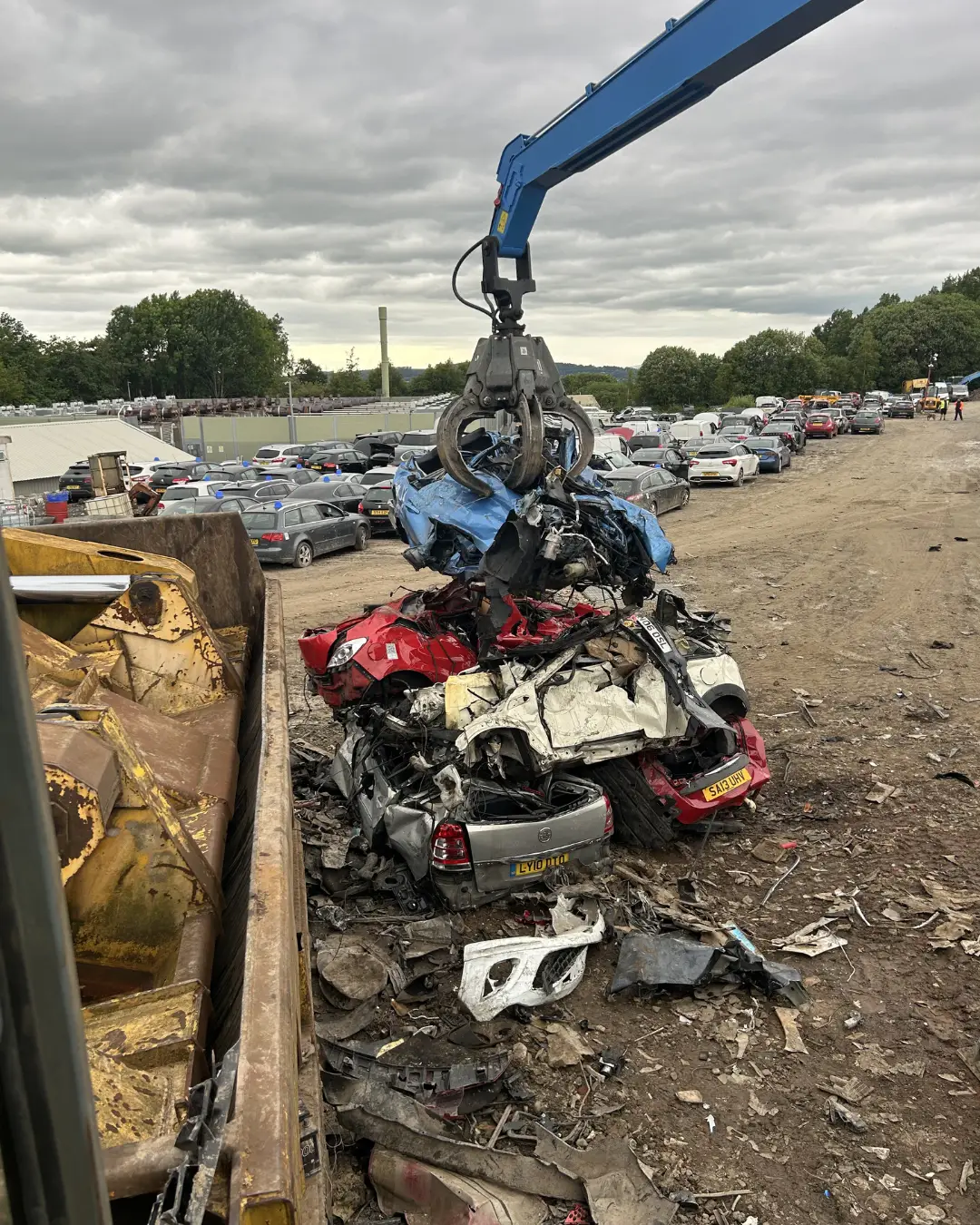
When your car is scrapped, certain certificates and proof documents confirm that it’s been processed legally and in line with DVLA regulations.
Once your vehicle has been scrapped, you may receive a Certificate of Destruction (CoD) confirming it has been permanently destroyed and removed from the road.
Here you’ll find everything you need to know about CoDs, including when they’re issued, whether you need one, how long they take to arrive and how to confirm your vehicle has been legally scrapped.
A Certificate of Destruction is an official DVLA document issued by an Authorised Treatment Facility once your car has been permanently destroyed.
It confirms that the vehicle is no longer on the road and that you’re no longer responsible for it.
Not every vehicle requires a Certificate of Destruction. They are only required when a vehicle absolutely has to be fully scrapped.
This is common with insurance write-offs. Some will not require them, though, like category B vehicles, so make sure you know beforehand.
A CoD is only issued once a car is permanently destroyed at an ATF.
You may need one for insurance claims, insurance write-offs or scrappage scheme applications.
If your car is resold or dismantled for parts as salvage, a CoD will not be issued.
If your vehicle is due to be destroyed, let us know when booking your collection.
Once it’s processed, the ATF will issue the CoD and update the DVLA.
You’ll usually receive your certificate within 7–10 working days.
An Authorised Treatment Facility issues a Certificate of Destruction when it accepts an eligible end-of-life vehicle for destruction and records it through the DVLA system.
Legislation requires an ATF to issue the certificate to the last holder or owner for vehicles within the relevant categories.
The exact timing can vary depending on:
Through Scrap Local, certificates are commonly expected after the vehicle has been received and processed by the relevant ATF.
Where the network partner advises an estimated timeframe, this will often be around 7–10 working days, but it should not be presented as a statutory DVLA deadline or a guarantee.
Not every vehicle collected through a salvage route will receive a CoD. If the vehicle is repairable, resold or dismantled without being recorded as permanently destroyed, a Certificate of Destruction may not be appropriate.
First confirm whether the vehicle was due to receive one. A Certificate of Destruction is normally issued for an eligible end-of-life car, light van or qualifying three-wheeled vehicle that has been accepted by an ATF for permanent destruction.
It will not normally be issued where the vehicle is repaired and resold rather than destroyed.
If a CoD was expected but has not arrived:
You should also make sure you have independently notified the DVLA that the vehicle was transferred.
If the DVLA has not confirmed the update, contact it directly rather than relying solely on the missing certificate.
You can check using the DVLA vehicle status tool.
If it shows the car as “scrapped” or “no longer on the road,” the record has been updated.
You can also contact the ATF that handled your vehicle for confirmation.
If your vehicle is off the road before collection, you may need to make a Statutory Off Road Notification (SORN) and understand what happens to your vehicle tax when it’s scrapped.
These FAQs explain when a SORN is required, how long it lasts, whether it ends automatically after scrapping, and what happens to any remaining road tax, including refunds from the DVLA.
A SORN, or Statutory Off Road Notification, is a legal declaration that tells the DVLA your car isn’t being driven or kept on public roads.
You don’t need to pay tax or insurance during this time, but the vehicle must stay off-road.
You can SORN your vehicle:
Confirmation is usually instant online or by phone and takes a few days by post.
A SORN has no expiry date. It stays active until you tax the vehicle again, sell it, scrap it, or export it.
Once Scrap Local notifies the DVLA that your car’s been scrapped, your SORN automatically ends.
No, not if your car is being collected straight away.
If it’s going to be off-road for a while before collection, making a SORN prevents you from paying unnecessary road tax.
A SORN remains in place until the vehicle is taxed again, sold, transferred, scrapped or permanently exported.
Once the DVLA has processed the notification that the vehicle has been transferred for scrapping, the SORN ends because you are no longer recorded as responsible for that vehicle
You do not need to separately “cancel” a SORN before Scrap Local collects the car.
However, you must still notify the DVLA of the transfer; the SORN itself does not tell the DVLA that the car has been scrapped.
Until collection, a SORN vehicle must remain off the public road. If it cannot legally be driven, Scrap Local’s collection partner will recover it using suitable transport.
To unsorn your car, simply tax it again through the DVLA.
The moment your tax payment is processed, the SORN ends automatically.
You don’t need to cancel your road tax yourself.
Once the DVLA confirms your vehicle has been scrapped, they’ll automatically cancel your tax and refund any remaining full months.
If you pay by Direct Debit, check your bank to make sure payments have stopped.
When you tell the DVLA that you have sold, transferred or scrapped the vehicle, its tax is cancelled automatically.
The DVLA refunds any full remaining months of vehicle tax to the registered keeper shown on its records. Partial months are not refunded.
The refund is calculated from the date the DVLA processes the qualifying notification, which is another reason to report the transfer promptly.
If tax was being paid by Direct Debit, future payments should stop automatically once the record is updated.
The refund comes from the DVLA, not Scrap Local or the collection driver.
Make sure the DVLA holds the correct name and address because that information may be used when issuing the refund.
Before scrapping your vehicle, it’s important to make sure you have the legal authority to do so.
Whether your car has outstanding finance, is leased, owned by a company, or you’re not the registered keeper, these FAQs explain who can authorise a vehicle for scrapping and the steps you should take before collection.
You’ll also find guidance on insurance and other legal responsibilities once your vehicle has been recycled.
You can’t scrap a vehicle with active finance, as it legally belongs to the lender until the balance is settled.
Scrapping it without consent could be considered fraud.
To resolve this, you can:
No, but you must be able to prove your right to scrap it.
We’ll ask for photo ID, the keys, and, ideally, the V5C logbook to verify ownership.
This protects both you and the recycling facility from potential legal issues.
You can confirm this by using a vehicle check service like HPI Check, Experian, or Total Car Check.
These services reveal any active finance agreements.
For complete accuracy, contact your lender directly for confirmation.
You cannot normally scrap a leased vehicle yourself because the leasing company remains its legal owner.
Being the registered keeper or regular driver does not automatically give you authority to sell or destroy it.
If the vehicle is damaged, uneconomical to repair or has reached the end of its lease, contact the leasing company first. It may:
Scrap Local would need clear authority from the legal owner before arranging the destruction or sale of a leased vehicle.
A customer should not accept a Scrap Local quote or authorise collection without the leasing company’s written approval.
A company car can be scrapped, but the person arranging it must have authority from the business or legal owner.
Scrap Local may ask for:
If the vehicle is leased or subject to finance, the company must first obtain permission from the finance or leasing provider.
Payment should be made to the legally entitled person or business using the bank details agreed during Scrap Local’s verification process.
The appropriate company representative must also ensure the DVLA is notified of the transfer.
Yes, you should contact your insurer and tell it that the vehicle has been transferred or scrapped.
Do not assume that notifying the DVLA automatically cancels the insurance policy; they are separate organisations and separate contracts.
It is usually safest to contact the insurer once collection has taken place and you have evidence of the handover.
Cancelling too early could leave the vehicle uninsured while it is still in your possession, particularly if it remains on a public road or needs to be moved.
Your insurer will explain whether:
Where an insurance company has written off the vehicle, it will often arrange disposal itself, but the keeper must still follow the relevant DVLA written-off vehicle process.
Scrap Local can provide collection information and, where applicable, help you obtain destruction documentation, but the cancellation and any refund remain matters between you and your insurer.





Choose a service & we’ll search our network to find you the best scrapyard for your enquiry!
Scrap Local has hundreds of UK-licensed scrap car buyers ready to buy your scrap car.